• Home
  • About
    • About Maritime Trends
    • MT 2020
  • Speakers
  • PROGRAME
  • News
  • Contact
  • Spanish
  • English
Register now
  • Home
  • About
    • About Maritime Trends
    • MT 2020
  • Speakers
  • PROGRAME
  • News
  • Contact
  • Spanish
  • English
Register now
  • Home
  • About
    • About Maritime Trends
    • MT 2020
  • Speakers
  • PROGRAME
  • News
  • Contact
  • Spanish
  • English
  • Home
  • About
    • About Maritime Trends
    • MT 2020
  • Speakers
  • PROGRAME
  • News
  • Contact
  • Spanish
  • English
Home Archive by Category "News"
News
News
[ 26 February 2026 by Maritime Trends 0 Comments ]

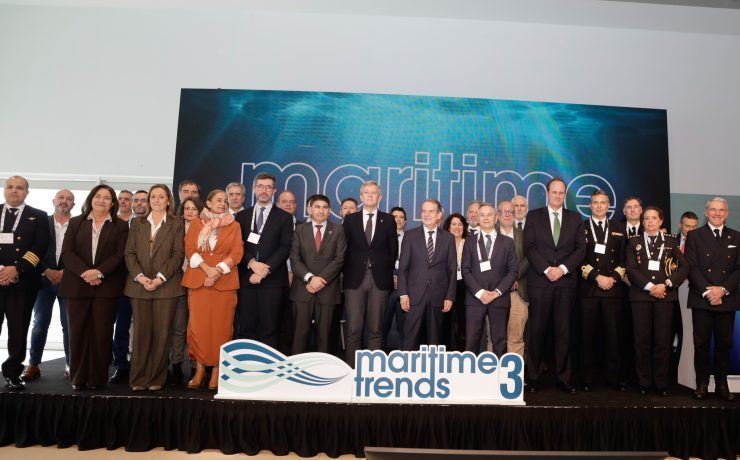
Maritime Trends 3 reúne en Vigo a la industria naval, marítima y portuaria

  • Asime ha cerrado hoy en Vigo la tercera edición del Maritime Trends Summit.
  • El Congreso Internacional Naval, Marítimo y Portuario ha reunido a más de 200 representantes empresariales y organizaciones líderes en el sector a nivel nacional e internacional, que han debatido sobre las últimas tendencias y futuro de esta industria, a la vez que han establecido contactos para cerrar nuevos proyectos y colaboraciones.
  • El evento ha contado con el patrocinio platino de las empresas Grupo Davila, Ferri, Panelship y Santander y con el patrocinio gold de Detegasa, Ghenova, Macroinsa y Torvigo.

Asime ha celebrado en Vigo la 3ª edición de Maritime Trends Summit, el congreso internacional de referencia para la industria naval, marítima y portuaria.

El evento comenzó ayer, 24 de febrero, con visitas empresariales a las instalaciones del astillero Metalships, así como un cóctel networking con todos los asistentes.

Hoy, miércoles 24 de febrero, la actividad del congreso se ha trasladado al Auditorio Mar de Vigo, donde se han dado cita más de 20 ponentes y 200 asistentes.

Con esta iniciativa, el clúster del metal gallego ofrece un espacio de encuentro para la industria naval-marítima y portuaria a nivel internacional:

“Maritime Trends Summit se consolida en esta tercera edición como evento de referencia en el sector. Es un congreso singular, que se diferencia de otros eventos por estar muy orientado a la generación de negocio. A la vez que analizamos juntos las últimas tendencias del sector, lo que buscamos es generar posibilidades de negocio”. Para ello, explica, han “acercado a los compradores a nuestras empresas del mundo naval-marítimo, que en Asime son más de 270, una de nuestras actividades fundamentales”, destacó Enrique Mallón, Secretario General de Asime.

En el evento se han dado cita más de 200 expertos a nivel nacional e internacional, entre los que han estado astilleros nacionales e internacionales, empresas armadoras, ingenierías e industria auxiliar, organismos públicos de seguridad y defensa, la Armada, autoridades institucionales y todos actores de la cadena de valor, todos con participación especial de responsables de compras de estas empresas, que asistieron al evento para captar posibles proveedores, tal y como explican desde Asime.

5 sesiones temáticas

Maritime Trends Summit acogió en 5 sesiones debates sobre temas de gran actualidad como la realidad actual de astilleros y armadores, vías de diversificación y nuevas oportunidades de negocio, reparación y construcción naval, o perspectivas en seguridad y defensa. Para ello, se contó con la participación de ponentes expertos de todas las áreas clave de la industria naval-marítima y portuaria a nivel internacional: astilleros nacionales e internacionales (Grupo Armón, Metalships, Nodosa Shipyard, Freire Shipyard, el canario Zamakona Yards, el holandés Damen Shipyards o el portugués West Sea Viana); líderes en seguridad y defensa (La Armada, Sasemar, Navantia); empresas armadoras (Eimskip Group y Höeg Autoliners); empresas de logística (Suardiaz Grupo), ingenierías (Ghenova y Detegasa) o líderes en eólica marina (Navantia Seanergies); así como autoridades civiles y militares del máximo nivel.

Apertura institucional

Durante la apertura, Enrique Mallón, Secretario General de Asime, aprovechó para incidir que en “estamos en un buen momento, la capacidad productiva ocupada ronda de media el 80%. Son buenas cifras, pero con margen para seguir creciendo. Hay que seguir trabajando por ampliar cartera de pedidos y proyectos, y por ello congresos como Maritime Trends Summit son cruciales para nuestro sector”.

Desde Asime inciden en el liderazgo gallego en nichos estratégicos como buques oceanográficos y de investigación, buques pesqueros, buques auxiliares para energías renovables marinas y buques offshore, segmentos donde la industria nacional compite en calidad, innovación y sostenibilidad. A estos, se suma el vector de seguridad y defensa, impulsado desde el grupo especializado SECDEFENSE-Asime, donde “no solo lideramos con la construcción de las fragatas F-110 en el astillero de Ferrol, sino también con diversas embarcaciones y patrulleras para fuerzas de seguridad nacionales e internacionales”.

El ecosistema naval-marítimo sigue siendo uno de los grandes motores industriales. Actualmente, Asime agrupa a más de 270 empresas con capacidad naval y marítima, generando en torno a 8.500 empleos directos y 3.000 indirectos, constituyendo un pilar fundamental del tejido industrial gallego.

Además, la industria naval gallego mantiene un marcado carácter internacional. En la última década, alrededor del 90% de los buques construidos en Galicia se destinaron a la exportación, consolidando su presencia en mercados estratégicos de Europa, América y Asia.

Carlos Botana, Presidente de la Autoridad Portuaria de Vigo: “Debemos estar orgullosos de nuestros astilleros, que están altamente especializados. Somos líderes en buques de alto valor como oceanográficos, buques militares u offshore, y desde el Puerto tendemos nuestra mano a toda la colaboración necesaria para seguir impulsando este sector crucial para nuestra economía y para nuestro territorio”

Luisa Sánchez, Vicepresidenta de la Deputación de Pontevedra: “Maritime Trends convierte a Vigo en punto internacional de la industria y la innovación marítima. Esta es una ciudad que ha crecido mirando al mar, construyendo valor y proyectándose al mundo desde él, con Asime como entidad activadora, aportando proyectos. Esta industria es la base del desarrollo de Vigo desde hace décadas, por lo que encuentros como este son clave para ponernos en el mapa internacional”.

David Regades, Delegado del Consorcio Zona Franca de Vigo: “Maritime Trends se consolida como foco de análisis y también de generación de riqueza y oportunidades para nuestro territorio, algo clave para contribuir a la soberanía europea de nuestra industria, afrontando los retos de la automatización, sostenibilidad y digitalización para seguir impulsando nuestra competitividad. Desde las administraciones públicas debemos incidir en la colaboración, y prueba de ello son los 108 millones de euros que ha movilizado el PERTE naval entre 212 empresas, con 89 proyectos en Galicia por un valor de 110 millones de euros”.

Clausura institucional

En la clausura del congreso, Justo Sierra, Presidente de Asime, incidió en que Galicia concentra el 41% de la cartera de pedidos a nivel nacional y el 33% de los nuevos contratos. Cerró 2025 con 34 pedidos en cartera, 6 de ellos relativos a las fragatas F-110 y el buque de apoyo para la Marina Española, mientras que los astilleros privados acumularon un total de 28 buques contratados por valor de 1.600 millones de euros. El 80% de ellos serán para armadores extranjeros. “Por lo tanto, la senda de crecimiento es evidente; estamos en un buen momento para la industria naval-marítima gallega y debemos seguir reforzando esta tendencia, por eso congresos como Maritime Trends son importantes para cerrar nuevos pedidos y colaboraciones”

Pedro Blanco, Delegado del Gobierno en Galicia: “Asime representa mucho más que un clúster empresarial, es una forma de entender la industria desde el arraigo y el valor local. Galicia es una potencia naval, por historia, capacidad, tecnología y talento. Cuenta con un tejido empresarial que ha sabido adaptarse a los cambios de ciclo, generando hoy el 5% del PIB en Galicia y más de 8.000 empleos directos. Es momento de hacer frente a retos como digitalización, buques tecnológicos, defensa, energías marinas y relocalización industrial en Europa. Necesitamos una política industrial que vuelva a situar la industria naval en el centro. España es hoy un socio fiable y competitivo, con grandes oportunidades en áreas como la eólica marina, en la que Galicia reúne condiciones excepcionales para convertirse en referente mundial. Ese desarrollo debe hacerse desde la responsabilidad y la convivencia con otros sectores estratégicos como la pesca, sin desaprovechar la oportunidad de empleo y estabilidad extraordinaria que nos brinda”.

Abel Caballero, Alcalde de Vigo: “La industria es el lugar central de la economía, donde se producen las grandes revoluciones. En este momento la economía española tira y lidera el crecimiento económico de la OCDE, siendo el aumento de la productividad lo que nos lleva a una mayor calidad de vida. El naval juega un rol clave para el desarrollo tecnológico, tanto es así que hizo que la automoción viniera a Vigo. Debemos seguir en esa línea, atrayendo tecnologías como la IA, haciendo que reviertan en el beneficio de la sociedad”.

Alfonso Rueda, Presidente de la Xunta de Galicia: “Después de años complicados marcados por el tax lease, falta de pedidos y reconversiones, constatamos hoy el buen momento que vive la industria naval gallega. Entre los retos, tenemos que encontrar más mano de obra cualificada para hacer frente a lo que está por venir, pero esto es buen síntoma de que las cosas se están haciendo bien, porque crecen los pedidos y la carga de trabajo. Desde la Xunta, a nosotros nos toca apoyar y lo vamos a seguir haciendo, porque los barcos que se hacen, reparan y diseñan aquí son Galicia Calidade y nuestra marca en el mundo”.

Rueda agradeció también tener un interlocutor como Asime, “que reúne a toda la cadena de valor, para intentar identificar los problemas y ser eficaces a través del plan director del naval y otros instrumentos”.

En lo relativo a los nuevos nichos de negocio, destacó la defensa: “los pedidos que concentran los astilleros gallegos, especialmente en Ferrolterra y Navantia, denotan que las cosas se están haciendo bien. Aquí hay presente y futuro y que merece la pena apostar por profesionales cualificados que se están formando aquí y que quieren trabajar aquí”. Asimismo, incidió en el vector de las energías renovables, “para Galicia es una magnífica noticia que podamos seguir con el plan de repotenciación de torres eólicas, pero también tenemos una gran oportunidad en eólica marina, que no podemos dejar pasar”.

Mensajes clave

1. Vías de negocio y diversificación

En la sesión sobre vías de negocio y diversificación, patrocinada por el Banco Santander, se abordaron nuevos nichos de negocio en lo relativo a la eólica marina, la ingeniería o vector de yates y oceanográficos.

  • Raúl Rodríguez, Offshore Renewables Director de Ghenova: “Los proyectos los tenemos que hacer más rápido y trabajando desde la cooperación a nivel europeo, no desde la competencia. De lo contrario, perderemos nuestra posición. Tenemos que acortar los ciclos de desarrollo, clave para ingenierías como la nuestra, y trabajar en diseños más robustos, que no haya cambios una vez iniciada la fabricación, y centrándonos en tecnologías avanzadas, no en volumen sino en calidad”.
  • Alejandra Riva, Project Manager en Suardiaz Group: “Para nosotros el reto optimización rutas y cargas para un uso más sostenible y eficiente de nuestros recursos, sin afectar a nuestro rendimiento operativo. De hecho, nuestros clientes ya nos piden un control exhaustivo de nuestras emisiones durante toda la ruta”.
  • Luis Santos, Director Técnico de Freire Shipyard: “Nosotros somos ejemplo de una especialización en sectores de alto valor añadido y tecnológicamente sofisticados, manteniendo diversificación para no generar dependencias únicas. Así, trabajamos en buques oceanográficos, pero seguimos a su vez construyendo buques de pesca con factorías automatizadas, grandes yates, y ahora hemos entrado también en el nicho de buques de apoyo para las armadas. Este tipo de trabajos nos ha permitido adquirir habilidades que podemos aportar en los distintos vectores, la diversificación está por tanto no solo es en los diferentes tipos de barcos que hacemos, sino también en sus aplicaciones tecnológicas”.
  • Ángel Fernández, Business Development Manager de Navantia Seanergies: “En lo relativo a la eólica marina, las empresas, si no ven un pipeline de proyectos venideros, no van a invertir en sus capacidades existentes y futuras, por lo que se pone en riesgo nuestro posicionamiento industrial. En Navantia, hasta hace un año, habíamos fabricado el 85% de los flotadores de eólica marina a nivel comercial en Europa, pero ahora estamos bajando al 50%. Europa debe escalar urgentemente los proyectos de eólica marina de manera ágil, porque si no, se van a fabricar estos componentes en las zonas en las que sí hay proyectos”. Asimismo, Fernández incidió en los retos como la competencia china, que es líder en el vector naval y amenaza ahora con escalar posiciones también en materia eólica marina, pero también en la necesidad de adecuar las infraestructuras de los puertos, el consumo intensivo de mano de obra y superficie de esta industria o la necesidad de mayor alcance del transporte logístico.

2. Armadores

En el panel de armadores, patrocinado por Grupo Davila y moderado por Pablo González, su Director de Comunicación, empresas de referencia expusieron su visión sobre las tendencias y oportunidades para la industria en el panorama actual.

  • Iñaki Echeverría, Head of Country Spain en Höegh Autoliners: “El transporte de carga rodada está sufriendo los mayores cambios de su historia. Por un lado, cambia el producto que transportamos y se flexibilizan las cargas, porque ahora los coches son eléctricos y, además, los buques roro combinan también transportan a la vez cargas altas como excavadoras o trenes. Por otro lado, tenemos que ir hacia buques más grandes, que nos permiten bajar las emisiones, y abordar combustibles alternativos, que pasan todos por vectores del hidrógeno, como el metanol o el amoniaco”.
  • Eva Ortiz, Managing Directora de España en Eimskip, incició por su parte en la geopolítica. “El transporte marítimo al final siempre se acaba abriendo camino, por muchas crisis que existan en diversos puntos del planeta. Si se cierra una ruta se busca una alternativa, si se cierra un mercado se exploran otros. Somos un sector muy ágil, preparado para responder a retos. Buena prueba de ello es que el transporte marítimo ha pasado de simplemente mover carga a gestionar también eficiencia y digitalización”.

3. Reparación naval

Sobre reparación naval se habló de tendencias, retos y oportunidades de crecimiento con diversos astilleros del panorama nacional:

  • Luis Ramón de Celis, Responsable de División de Reparaciones de Metalships: “El 60% de la flota mundial va camino de los 20 años, por lo que hay una gran demanda para renovar buques antiguos. La capacidad de adaptación en la reparación naval es fundamental, con reglamentaciones y crisis constantes que hacen que unos sectores caigan y emerjan otros, tenemos que trabajar en la agilidad para poder atender a todo”. Respecto a los competidores extranjeros, de Celis incidió en que “nuestra relación calidad precio es muy buena, los turcos y chinos compiten en precio, pero no juegan en nuestras áreas de especialización”.
  • José Ramón Regueira, Director Comercial de Nodosa Shipyard: “cada vez las reglamentaciones son más estrictas, con agendas medioambientales, y estándares de confort de abordo, higiene o seguridad, que obligan a hacer grandes reformas en los buques. Donde más oportunidades vemos es en defensa y eólica marina , pero no queremos abandonar pesca o mercantes, donde también nos hemos hecho fuertes, la reparación lo abarca todo y debemos seguir incidiendo en la diversificación”.
  • Guillermo Ramos, Consejero Astillero Canarias de Zamakona Yards: “En canarias, la reparación naval aporta 400 millones de euros, atendiendo a 1.500 barcos y 5.5500 empleos. Es el sector más estratégico después del turismo. Actualmente, la reparación tiende a la adaptación de buques a nuevos combustibles. La evolución del mercado la marcarán los armadores, nosotros tenemos que estar preparados con todas nuestras capacidades a disposición”.

4. Construcción naval

Hubo también lugar para hablar no solo de reparación naval, sino también de construcción, donde astilleros nacionales e internacionales hicieron un recorrido por lo último en tecnología, capacidades y competitividad.

  • Sergi Espinosa, Service Manager Spain & Portugal en Damen Shipyards (Países Bajos): “La industria está en un momento en el que invertir en sostenibilidad, digitalización y eficiencia es una necesidad. Los astilleros que no puedan adaptarse a esa evolución tecnológica y retener talento al mismo tiempo, tendrán problemas. En ese contexto, la colaboración entre astilleros y la atracción de talento son clave”.
  • Adolfo Navarro, Senior Proposal Manager – Sales & Business Development en Grupo Armón (España): “Un astillero de éxito tiene que basarse en diversificación e internacionalización. En 2025 la contratación de nuevas construcciones cayó un 30% a nivel mundial, pero el dato positivo es que estamos en récords en cartera de pedidos en el sector privado, con niveles de contratación similares o superiores a los que teníamos antes de la crisis del tax lease y un 60% superior tras la caída de la pandemia”. Respecto al reto de la mano de obra, Navarro incidió en que “somos la tercera entidad que contrata más ingenieros navales en España. Esta industria es intensiva en capital humano, y sí, faltan profesionales, pero no siempre faltan jóvenes, sino una narrativa positiva de nuestro mercado y valor”.
  • Renato Afonso, Coordinating Director de West Sea Viana (Portugal): “En nuestro astillero, tenemos un nuevo dique para reparación naval que estará listo en mayo. La estrategia a futuro es fomentar la reparación en un 60% construcción y 40% reparación, encontrando mayor valor en ambas áreas, que nos permitan seguir fidelizando clientes”. Respecto a las previsiones de futuro, Afonso considera que “el volumen de pedidos va a bajar a medio-largo plazo, porque los mercados emergentes van a conseguir competir y porque nuestro sistema regulatorio es estricto, pero ahí también tenemos la oportunidad de aportar lo que los otros países no pueden hacer, con nuestra especialización y también colaborando entre nosotros y con la cadena de valor a nivel europeo”.

5. Seguridad y defensa

Por último, se abordó una de las áreas de mayor crecimiento en la actualidad, la de seguridad y defensa, con un panel patrocinado por Industrias Ferri y moderado por su CEO y Vicepresidente de Asime, Patricio Fernández.

  • CN ING (r) Indalecio Seijo, Consultor de Defensa de Detegasa: “La industria auxiliar tiene que seguir insistiendo en sus fortalezas, que son la rapidez, flexibilidad, especialización y digitalización para seguir respondiendo como lo que demandan las administraciones que contratan buques militares”.
  • Rafael Seijo, Responsable de Programas de Defensa del Astillero de Navantia Ferrol: “El reto principal de la industria de defensa es disponer de capacidades para responder al incremento de la demanda. Tenemos que crecer en instalaciones, tecnología y capital humano. Nosotros hemos dado un paso al frente en ese sentido, con elevadas inversiones, y es que vamos hacia plataformas y buques cada vez más inteligentes, autónomos, conectados y sostenibles, operando en entornos más complejos. En ese sentido es crucial el valor nacional, y es que en el programa F110 participan 500 empresas españolas, dando buena cuenta del contenido nacional que tiene la fragata”.
  • José Luis García Lena, Director de Sasemar: “Estamos ante un momento crucial de avance tecnológico, sin ir más lejos, nuestro último buque incorpora una cubierta para aterrizaje de drones. Es el momento de que las administraciones adquiramos buques más eficientes, haciendo frente a retos tecnológicos clave como la ciberseguridad, IA, transporte de coches eléctricos y sustancias químicas, o el uso de nuevos combustibles como amoniaco e hidrógeno”.
  • Contraalmirante Francisco Antón Brage, Almirante Subdirector de Ingeniería y Construcciones Navales de La Armada: “Nuestro gran reto de reducir los tiempos que transcurren entre el momento en el que se decide la necesidad operativa hasta que tenemos el producto, porque los plazos en defensa son muy largos y corremos el riesgo de que la tecnología desarrollada se quede obsoleta. Sin ir más lejos, en la fragata f110, desde que se firma el último documento por parte del estado mayor hasta que se recibe la primera unidad van a transcurrir 14 años. En este contexto, es imprescindible también incidir en la movilización de la industria nacional. El nivel de nacionalización de los programas de La Armada es muy alto, en ellos exigimos que el 70% sean suministradores nacionales, para favorecer la cadena de valor local”.
Video

News
[ 17 February 2026 by Maritime Trends 0 Comments ]

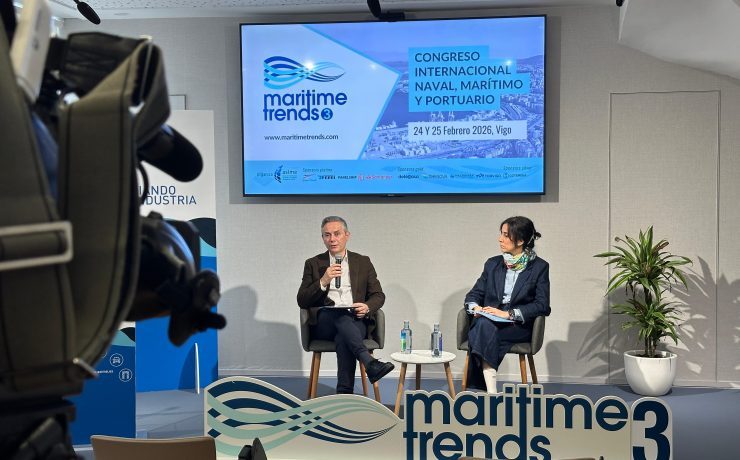
Asime presents the 3rd edition of the Maritime Trends Summit to the media

Asime will hold the third edition of the Maritime Trends Summit on February 24 and 25 in Vigo.
The International Naval, Maritime, and Port Congress will be a meeting point for 200 business representatives and leading organizations in the sector at the national and international level, who will discuss the latest trends and the future of this industry.
The event is sponsored by Grupo Davila, Ferri, Panelship, and Santander as platinum sponsors, and by Detegasa, Ghenova, Macroinsa, and Torvigo as gold sponsors.

This morning, Asime presented the details of the third edition of the Maritime Trends Summit, its International Naval, Maritime and Port Congress, which will take place on February 24 and 25 in Vigo, at its headquarters in Vigo.

Enrique Mallón, Secretary General of Asime, highlighted that “the Maritime Trends Summit is consolidating itself in this third edition as a benchmark event in the sector. It is a unique congress, which differs from other events in that it is very focused on generating business. While we analyze the latest trends in the sector together, what we are looking for is to generate business opportunities.“ To this end, he explains, they seek to ”bring buyers closer to our companies in the naval-maritime world, of which there are more than 270 in Asime, one of our fundamental activities.”

More than 200 national and international experts are expected to attend the event, including national and international shipyards, shipbuilding companies, engineering and auxiliary industries, public security and defense agencies, the Navy, institutional authorities, and all actors in the value chain. There will be notable participation from the purchasing managers of all these companies, who will attend the event to recruit potential suppliers, as explained by Asime.

Activities during the conference

On February 24, business visits to the Metalships Shipyard facilities will be organized. In addition, on the same day at 7:30 p.m., a networking cocktail party will be held with the aim of enriching the experience of the participants, providing a relaxed atmosphere for networking and interaction among attendees.
On February 25, the conference activities will move to the Mar de Vigo Auditorium, where the conference presentations will take place from 9:00 a.m. to 2:30 p.m. There will also be a cocktail reception at the end to continue providing networking opportunities to promote business and joint projects between companies.

Presentations

Rebeca Gil, Technical Coordinator of the Congress, revealed some details of the congress presentations, in which “we will bring together the main international players in the industry to examine, among other topics, the current situation of shipyards in shipbuilding and repair, new areas of business and diversification, shipowner trends, and prospects and challenges in security and defense.

“Both attendees and speakers will focus particularly on profiles that favor business generation, especially fleet and shipyard managers, purchasing managers, and supply managers.”

The conference will be organized into different panels, including:

Security and defense industry, with participation from the Spanish Navy, Sasemar, Navantia, and Detegasa.
Shipbuilding and repair, where experts from leading shipyards such as Grupo Armón, Metalships, Nodosa Shipyard, Zamakona Yards in the Canary Islands, Damen Shipyards in the Netherlands, and West Sea Viana in Portugal will discuss capabilities and the importance of the value chain.
With regard to shipowners, companies such as Eimskip Group and Höeg Autoliners will participate, offering their views on trends and opportunities for the industry in the current landscape.
Business and diversification opportunities will also be addressed, with Navantia Seanergies discussing offshore wind power, Suardiaz Group discussing logistics, Ghenova discussing engineering, and Freire Shipyard discussing the vector.

The event will be opened by Carlos Botana, President of the Vigo Port Authority, and David Regades, Delegate of the Vigo Free Trade Zone Consortium. The closing ceremony will feature speeches by Justo Sierra, President of Asime; Abel Caballero, Mayor of Vigo; and Alfonso Rueda, President of the Regional Government of Galicia.

State of the sector

Regarding the current state of the naval-maritime industry in Galicia, Enrique Mallón took the opportunity to emphasize that “we are in a good moment, with production capacity at around 80% on average. These are good figures, but there is room for further growth. We must continue working to expand our order book and projects, which is why conferences such as the Maritime Trends Summit are crucial for our sector.”

Asime highlights Galicia’s leadership in strategic niches such as oceanographic and research vessels, fishing vessels, auxiliary vessels for marine renewable energy, and offshore vessels, segments where the national industry competes in terms of quality, innovation, and sustainability. Added to these is the security and defense vector, promoted by the specialized group SECDEFENSE-Asime, where “we not only lead with the construction of the F-110 frigates at the Ferrol shipyard, but also with various vessels and patrol boats for national and international security forces.”

The naval-maritime ecosystem continues to be one of the major industrial drivers. Currently, Asime brings together more than 270 companies with naval and maritime capabilities, generating around 8,500 direct jobs and several thousand indirect jobs, constituting a fundamental pillar of the Galician industrial fabric.

In addition, the Galician naval industry maintains a marked international character. In the last decade, around 90% of the ships built in Galicia were destined for export, consolidating their presence in strategic markets in Europe, America, and Asia.

In terms of its order book, Galicia continues to play a decisive role within the Spanish naval sector as a whole. The year 2025 closed with 34 orders in the portfolio, six of which were for F-110 frigates and a support vessel for the Spanish Navy, while private shipyards accumulated a total of 28 vessels contracted for a value of €1.6 billion. Eighty percent of these will be for foreign shipowners. Galicia thus accounts for 41% of the national order book and 33% of new contracts.

Among the challenges, Mallón emphasized employment: “New orders, especially those associated with the F-110 frigates, will require Navantia and its subcontractors to practically double their workforce, meaning that more than 4,000 additional people will be needed in the shipbuilding industry in the short to medium term. To alleviate this shortage, foreign workers are already being recruited, especially from Spanish-speaking countries. Currently, there are already some 800 jobs filled by non-EU workers, but this is not enough for shipyards and auxiliary companies to take on new contracts.”

Asime concluded by inviting “companies in the sector to participate in the Maritime Trends Summit and be part of this conversation about the present and future of the maritime, naval, and port world. We firmly believe that together we can contribute to the growth and sustainable development of this industry. We are sure that it will be an enriching experience for everyone.”


News
[ 1 December 2023 by Maritime Trends 0 Comments ]

Asime holds in Vigo the 2nd edition of the Maritime Trends Summit, international congress for the naval, maritime and port industry

  • Asime held today in Vigo the second edition of the Maritime Trends Summit.
  • The International Naval, Maritime and Port Congress brought together more than 200 business representatives and leading organisations in the sector at national and international level, who discussed the latest trends and the future of this industry, while establishing contacts to close new projects and collaborations.
  • The event was sponsored by the companies Ardora, Brezo, Coterena, Detegasa, Galenergy, Industrias Ferri, Grenalia, Grupo Davila, Marinsa, Ocean Winds and Royal Roos.

Asime has held in Vigo the 2nd edition of Maritime Trends Summit, the international reference congress for the naval, maritime and port industry.

The event began yesterday, 29th November, with business visits to the facilities of the Armón shipyard and the Port Authority of Vigo, as well as a networking cocktail at the Real Club Náutico de Vigo with all the attendees, which was inaugurated by the Regional Minister of Economy, Industry and Innovation, María Jesús Lorenzana and the Mayor of Vigo, Abel Caballero.

On Thursday 30 November, the congress activity moved to the Mar de Vigo Auditorium, where more than 20 speakers and 200 attendees have gathered.

With this initiative, the Galician metal cluster offers a meeting place for the naval-maritime and port industry at international level: “Maritime Trends Summit consolidates in this second edition as a reference event in the sector. It is a unique congress, which differs from other events because it is very business oriented. At the same time as we analyse together the latest trends in the sector, what we are looking for is to generate business opportunities”. To do this, he explains, they have “brought buyers closer to our companies in the naval-maritime world, which in Asime are more than 270, one of our core activities,” said Enrique Mallón, Secretary General of Asime.

The event brought together more than 200 national and international experts, including major shipbuilders, port representatives, maritime multinationals, heads of SMEs in the value chain, leaders of marine energy projects and, especially, purchasing managers of all these companies, who attended the event to attract potential suppliers, as explained from Asime.

7 thematic sessions

During the opening, Enrique Mallón, Secretary General of Asime, highlighted that the Galician naval-maritime industry has a unique and consolidated international brand.”Its wide range of capabilities, services and potential make it especially interesting for investors and customers ranging from cutting-edge shipbuilding and ship repair to efficient logistics with the motorway of the sea.

“In Galicia there are more than 270 companies with naval-maritime capacity integrated in Asime. This is a strong industry, which generates around 8,000 jobs and supports the economy of our territory. We are also a purely exporting industry, 90% of the ships built in Galicia in the last decade were exported abroad”.

Maritime Trends Summit hosted in 7 sessions debates on topical issues such as the current reality of shipyards and shipowners, ways of diversification, opportunities in defence, logistics and port challenges, technological innovations or the rise of marine energy. For this purpose, expert speakers from all the key areas of the international naval-maritime and port industry participated: national and international shipyards (Grupo Armón, Damen Shipyards, West Sea Viana, Nodosa Shipyard, Astilleros Gondán) European research centres (Fraunhofer CML, Centre for Logistics and Maritime Services); shipowning companies (Tri Marine, Armadora Pereira, Mystic Cruises); offshore wind promoters and producers (Greenalia, Ocean Winds); defence and security (Spanish Navy, Guardia Civil); and institutional authorities and other international actors.

Institutional closure

At the closing of the congress, Justo Sierra, President of Asime, stressed that “the productive capacity occupied is around 85% on average. Our order book represents 33% of the total of national CGTs, but Galicia accumulated 96% of all new contracts signed by Spanish shipyards in the first half of 2023.

Therefore, the growth path is evident; we are in a good moment for the Galician shipbuilding industry and we must continue reinforcing this trend, that is why congresses like Maritime Trends are important to close new orders and collaborations.

Regarding the challenges, Sierra highlighted that “we have major challenges ahead of us, such as the decarbonisation of a sector that, due to its technical characteristics, cannot be based solely on electrification. Innovation and training of professionals will play a crucial role, and in this context it is essential to mobilise sufficient public-private support through the naval PERTE and other important initiatives, which permeate towards SMEs and promote a real transformation of our productive fabric”, he concluded.

Elena Espinosa, Deputy Mayor of the City of Vigo: “The value chain of the naval, maritime and port sector involves a wide network of partners, suppliers and public and private organisations that make up an ecosystem that must collaborate efficiently, something that has been more than achieved in this Maritime Trends Summit. The biggest challenge now is to engage with the environment and in that respect we need to pioneer components and services in the field of emission reduction.

“Let us stand together for the sustainability of our industry, always based on the economic, social and environmental pillar, because these are challenges that we must overcome by walking together”.

Alfonso Rueda, President of the Xunta de Galicia: “Our commitment from the Xunta is to reduce bureaucracy to facilitate the economic life and efforts of the sector, which should not run up against unrealistic standards or goals. In addition, the need for skilled labour is widespread in the sector, so we are committed to supporting training, such as dual vocational training, to adjust the supply to the real demand of companies. Likewise, in terms of infrastructures, we are committed to establishing those that correspond to us at regional level, but also to claiming those that should be undertaken by the central government, because it is necessary to redistribute European funds to reach the entire associative fabric, as promised”.

Finally, Rueda highlighted the potential of offshore wind power:

We have to give it normality, institutionalise it, we have to talk to everyone and not allow “not here” positions, when, if it is done rationally and respecting the environment and other activities, we can promote thousands of jobs. We have to be the European hub of reference in offshore wind energy.

Key messages

The session on shipbuilding and ship repair addressed shipyard capacities and the importance of the value chain.

Adolfo Navarro, Sales and Business Development of Grupo Armón: “We look to the future with optimism, this is a strategic sector, capital-intensive and employment-generating, and it supports other key sectors such as fishing, tourism, logistics and defence. It is true that decarbonisation generates uncertainty, but it can have a dynamising effect on the renewal of the fleet. In addition, in Galicia we have an added value which is our excellent auxiliary industry, and there is no good shipyard if there are no good suppliers around”.

Carlos González, head of sales at Damen Shipyards: “The trends in the sector are sustainability and digitalisation, automation and propulsion are going to mark the ship of the future and for this we must work from operational excellence and the training of our professionals”.

Renato Afonso, Purchasing and Logistics Coordinator at West Sea Viana, also emphasised the pressing lack of qualified professionals throughout Europe and stressed that new propulsions will be fundamental in the medium term, “there is not going to be a single solution, we are moving towards a combination of fuels such as hydrogen, methanol and electric”.

On the more international side, Julius Küchle, Project leader and associate researcher at the Fraunhofer Center for Logistics and Maritime Services in Hannover (Germany), gave a keynote speech on the impact of autonomous shipping, which “offers huge cost reductions for shipowners, but poses a challenge for SMEs and ancillary industry, which must adapt to remain competitive”.

In the shipowners’ panel, leading companies presented their views on trends and opportunities for the industry in the current scenario.

Roque Serrano, Fleet Technical Director of Armadora Pereira, emphasized the challenge of decarbonization: “The issue is not only to make ships with sustainable propulsion, the challenge is also the access to replenish these renewable fuels. For fishing fleets this is still a chimera, especially those operating in seas such as the South Atlantic or parts of Africa, where such access is impossible today”.

José Manuel Blanco, Industrial and Fleet Operations Director of Tri Marine Group: “We must work on new materials and more sustainable designs, for example for the reduction of plastics, where 87% of our materials are already biodegradable”.

Trends in propulsion systems towards decarbonisation and digitalisation as a key tool for maintaining the competitiveness of the sector were also discussed.

Roberto Cabeceira, Area Director of Aitodetec, stressed that “the sector is receptive to technology, but there is still a general lack of knowledge about the improvements it can bring, for example in metric digitisation and re-engineering”.

Óscar Viéitez, CEO of Marinsa explained that emission reductions can be achieved through route optimisation (up to 20% reduction), hydrodynamics (15%), machinery (up to 20%) and, of course, fuels, where emission reductions can reach 100%, but are still a challenge in many cases”.

There was also time to talk about business avenues and diversification.
Captain Amadeu Albuquerque, Mystic Cruises’ Director of Nautical Operations: “In the cruise segment, navigation technology must be state-of-the-art and the use of AI equipment can greatly help crews to follow all the regulations in force, which are sometimes complex”.

José Ramón Regueira, Commercial Director of Nodosa Shipyard: “In addition to shipbuilding, repair is also a very important vector for Galicia. We carry out conversions, extensions, re-motorisations… major modernisations of great complexity”.

Juan Puente, head of subcontracting structures at Chantiers de l’Atlantique, also emphasised this aspect, highlighting the “evolution from fishing boats to new lines of business that are gaining more and more weight in international shipyards, such as large cruise ships, military vessels and offshore wind power”.

Maritime Trends also addressed the topic of offshore wind power, one of the booming business areas for the shipbuilding industry, due to the interrelation that exists with its value chain.

Raúl Martín, Head of Offshore Wind and New Technologies at Greenalia presented the GOFIO project being developed in Gran Canaria “This will be the first pre-commercial offshore wind farm in Spain. It is the only project outside of pilots and experimentation that is currently in the pipeline, it does not need to wait for an auction or regulatory calendar, we are going to start up a wind farm in Spanish waters with a total of 50MGW”.

Manuel Fernandez, Project Director at Ocean Winds, explained how the sector is evolving: “We currently have a total of 17GW of offshore wind farms in operation with an investment of 50,000 million euros. These are farms in operation, under construction or under development for the next 10 years and one third of them are already floating wind farms. However, most of these projects are in the USA and the UK, which are the leading countries in the regulation of this energy; we already have one underway off the coast of Portugal, but the challenge now is to speed up these investments here in Spain as well”.

Álvaro Platero, Project Coordinator of Astilleros Gondán complemented the debate with his vision as a shipyard: “Traditionally we started with fishing vessels, but we have been adapting to what has been coming and today we are proud to be able to show ships as diverse as offshore wind power, where Galicia has already positioned itself as an international reference”.

Finally, the thematic sessions closed with a panel on defence and security, with exceptional speakers.

Miguel Salom, Colonel of the Coastal and Maritime Police Headquarters of the Guardia Civil, explained that they are a historical client for the Spanish naval industry, with great demands due to the peculiarities to which the ships must respond in coastal security, but which also place them at the forefront. In this sense, he highlighted the new vessel contracted by the Civil Guard to the Armón shipyard which, with 82 metres in length, will be the largest of the corps to date”.

Raúl Rico, Production Manager of Navantia Ferrol Shipyard, commented that the shipyard employs 1,300 people, 2,000 with auxiliary industry and a total of 9,000 direct and indirect jobs. “In the last 30 years, defence has been a key vector for Navantia. We have produced for them large ships, amphibious aircraft carriers, destroyers, logistic ships… and now 5 f110 frigates, which are a Spanish project with the participation of many national companies and which allow us to face the future with very good prospects”.

Captain Francisco Antón, Deputy Director of Engineering of the Spanish Navy, emphasised that “in the Navy we pursue technological superiority and the avant-garde in our ships, but we have great challenges ahead of us. One of them is to speed up the timescales, as it normally takes 15 years from the time a defence system begins to be defined until it is produced. This puts equipment at risk of becoming obsolete or unable to respond to the threats in place at the time. Also, at the technological level, the key pillar, as we already integrate in the F-110 frigates, must be the digital twin, which provides operational and logistical support for decision making.


News
[ 7 November 2023 by Maritime Trends 0 Comments ]

Asime presents the 2nd International Congress Maritime Trends Summit

  • Asime will hold the second edition of the Maritime Trends Summit on 29 and 30 November in Vigo.
  • The International Naval, Maritime and Port Congress will be a meeting point for 200 business representatives and leading organisations in the sector at national and international level, who will discuss the latest trends and the future of this industry.
  • The event is sponsored by, among others, the companies Ardora, Brezo, Galenergy, Grenalia, Marinsa, Ocean Winds and Grupo Davila.
    This morning, Asime has presented at its headquarters in Vigo the details of the second edition of Maritime Trends Summit, its International Naval, Maritime and Port Congress, which will take place next 29th and 30th November in Vigo.

Enrique Mallón, Secretary General of Asime, highlighted that “Maritime Trends Summit consolidates in this second edition as a reference event in the sector. It is a unique congress, which differs from other events because it is very business oriented. At the same time as we analyse together the latest trends in the sector, what we are looking for is to generate business opportunities”. To do this, he explains, they seek “to bring buyers closer to our companies in the naval-maritime world, which in Asime are more than 270, one of our core activities”.

More than 200 national and international experts are expected to attend the event, including major shipbuilders, port representatives, maritime multinationals, heads of SMEs in the value chain, leaders of marine energy projects and, especially, purchasing managers of all these companies, who will attend the event to attract potential suppliers, as explained by Asime.

Activities during the congress

  • On 29 November, business visits will be organised to the facilities of the Armón Group and also to the Port Authority of Vigo. In addition, that same day at 20:30, a networking cocktail will be held at the Real Club Náutico de Vigo, with the aim of enriching the experience of the participants, providing a relaxed atmosphere in an incomparable setting, to generate contacts and interaction among attendees.
  • On the 30th of November, the congress activity moves to the Mar de Vigo Auditorium, where the congress presentations will take place from 09:00 to 14:30.There will also be a cocktail party at the end of the congress, to continue providing networking spaces to promote business and joint projects between companies.

Speeches

Rebeca Gil, Technical Coordinator of the Congress, gave some details of the congress presentations, in which “we will bring together the main players in the industry at international level, to examine, among other topics, the current reality of shipyards and shipowners, new business areas and markets, logistical and port challenges and the rise of marine energies”.

“Both attendees and speakers will have a special focus on profiles that favour the generation of business, especially fleet and shipyard managers, purchasing managers and supply managers”.

The congress will be organised into different panels, including the following:

  • Defence industry, with the intervention of the Spanish Navy.Shipbuilding and ship repair, where experts from leading shipyards such as Navantia, Grupo Armón, Nodosa Shipyard or the Portuguese West Sea Viana will talk about capabilities and the importance of the value chain.
  • Trends in propulsion systems will also be addressed, an area where important developments are taking place towards new energies linked to the energy transition, many of these developments precisely in Galicia, with companies such as Marinsa, which will offer a complete vision in this regard.
    Offshore wind power, one of the booming business areas for the naval industry, due to the interrelationship that exists with its value chain. For this reason, the opportunities presented for the value chain will be addressed, with promoters such as Greenalia and Oceans Winds.
  • A keynote speech by the Fraunhofer Centre for Logistics and Maritime Services in Hannover (Germany), one of the most internationally renowned research institutes in this field, which develops innovative solutions for the maritime sector and its supply chain; and the Port of Rotterdam, one of the largest in Europe.
  • The event will be closed by the president of Asime, Justo Sierra; the mayor of Vigo, Abel Caballero and the president of the Xunta de Galicia, Mr. Alfonso Rueda.

State of the sector

Regarding the current state of the naval-maritime sector in Galicia, Enrique Mallón took the opportunity to stress that “we are in a good moment, the productive capacity occupied is around 85% on average. These are good figures, but with room for further growth. Asime’s objective is still to recover the figure of 10,000 workers that existed in the sector years ago. At the moment we are still a long way off, at around 7,000, but now the reasons are more related to the lack of qualified personnel that affects all industries, and not to the lack of projects in recent years. We must continue working to expand our order book and projects, and that is why congresses such as the Maritime Trends Summit are crucial for our sector”.

“The Galician shipbuilding and maritime industry has a unique and consolidated international brand. Its wide range of capabilities, services and potential make it particularly interesting for investors and customers ranging from cutting-edge shipbuilding and ship repair to efficient logistics with the motorway of the sea. Precisely, with this international projection that is part of the DNA of our sector, we are participating this week in the Europort fair in Rotterdam, one of the most important in the world”, explained Enrique Mallón. A delegation of more than 10 companies led by Asime has travelled there to close new business opportunities and also to spread the celebration of the Maritime Trends Summit congress, with the aim of continuing to work on its international essence.

Asime concluded by inviting “companies in the sector to participate in Maritime Trends Summit and be part of this conversation about the present and future of the maritime, naval and port world. We firmly believe that together we can contribute to the growth and sustainable development of this sector. We are sure that it will be an enriching experience for all”.


News
[ 26 October 2020 by Maritime Trends 0 Comments ]

Maritime Trends Summit: international meeting point for the naval, maritime and port industry

Maritime Trends Summit has brought together the main actors of the naval-maritime industry at international level: companies, organizations and institutions that have reflected on the current state of the sector and the challenges it faces.

Asime held on October 22nd the Maritime Trends Summit, the new international congress of reference for the naval, maritime and port industry.

The event was held in a mixed form with more than 300 online attendees and 50 face-to-face participants in Vigo, reduced under invitation to the highest institutional and business representation.

With this initiative, the Galician metal cluster starts a meeting point for the naval, maritime and port industry at an international level:

“Maritime Trends is a unique event that has come to stay. With it, we give answer to the need that existed to go out to the exterior with a congress of this type, to debate with other companies and international actors towards where this industry goes and in which segments and opportunities we must locate or to deepen”, emphasizes Enrique Mallón, General Secretary of Asime.

“Today we have gathered in Maritime Trends an exceptional list of speakers and companies attending from more than 20 different countries, we have put the Galician naval-maritime industry on the map worldwide. This sector represents more than 3% of the EU GDP, it is a driving force in our economy and we have the great challenge and at the same time the great opportunity to make it a key pillar in the post-covid-19 economic recovery”, declared Rafael Outeiral, Vice President of Asime, during the opening of the Congress.

Official opening

The official opening of the event was carried out by the following institutional authorities:

  • David Regades, State Delegate in CZFV, “congratulated Asime for this initiative in an environment as complicated as the current one due to the challenge of covid-19. The intelligent ships, the talent and the knowledge of the sector are crucial to make the so-called blue economy a shared success”.
  • Carmela Silva, President of the Pontevedra Provincial Council, highlighted: “crises are faced as opportunities and ideas are what change the world. There is no doubt that many ideas will come out of this forum and will be important to continue having a powerful sea sector, adapted to the new times, with quality, advanced and technological employment”.
  • Francisco Conde, Vice-president and Regional Minister of Economy, Business and Innovation, stressed the importance of the naval industry: “We have to work together with the sector to promote the modernization of the naval industry and to identify leading projects in order to obtain European funds and to be equal with other countries like France, Germany and Holland that are promoting their naval sector. We have before us an opportunity to face new challenges through public-private collaboration”.
  • Abel Caballero, Mayor of Vigo, wanted to remind the need for cooperation among all in the field of pandemic and congratulated Asime for this initiative that “shows the ability to get ahead of the times and the changes that are coming. “The sea has always been a source of economic action and, from public-private cooperation, we need to set up a transversal alliance for a greater and more efficient use of European funds”.

5 thematic sessions

Maritime Trends Summit hosted in 5 sessions discussions on current topics such as innovation, blue economy, the ship of the future, offshore wind energy or port logistics. To this end, speakers included experts from all key areas of the international shipbuilding and port industry: national and international shipyards such as Navantia, Barreras and Babcock; European organizations such as the European Commission or the European Association of Ports and Harbors; engineering companies such as Ghenova and CT; knowledge centers such as Fraunhofer, the Center for Innovation in Transportation (CENIT) or the Institute for Diversification and Energy Saving (IDAE) and institutional authorities and many other actors on the international scene.

Some of the key messages that were highlighted had an impact on the following aspects:

  • Jorge Filgueira, Director of Astilleros Ría de Ferrol in Navantia, highlighted in his speech: “We need to specialize, digitize and promote products with added value. It is necessary to adapt the workforce to the new technologies and for that a strategic plan in dual and university training is needed. In addition, from Navantia we work intensely to be a sustainable shipyard, with a digitalized structure, that annuls the emissions and integrates in a more direct way the auxiliary industry more in the shipyards”.
  • Douglas Prothero, Executive Chairman of Barreras, highlighted that “it is very relevant to be able to participate and manage the whole life cycle of the ship, besides it is necessary to invest in people and not only in equipment. From Barreras we are looking for collaboration with the government, which has to value the potential of the sector and support it. There are great opportunities in Galicia, we have to contribute with sustainability”.
  • Manuel García, Greenalia’s CEO: “We have been studying the area in the Canary Islands for more than two years for the possible implantation of marine wind farms, attending to the requirements of all the actors, both environmental and industrial, and pending a regulation that can allow this implantation guaranteeing the minimum impact. Galicia, without a doubt, is also a site with potential for the implementation of this energy”.
  • Ignacio Gutiérrez Santalo, Iberdrola’s Coordinator of Marine Wind Energy Development Spain, highlighted: “We have been working in Galicia for more than 60 years, we work hand in hand and we believe that it has a great resource and a great industrial fabric and 100% of the value chain. We can talk about the creation of around 5,000 jobs during the construction phase of the wind farm and Galicia can be a hub for all the projects in the North Sea and nearby areas.
  • Manuel Antonio Martínez-Ruiz, Vice Admiral Director of Naval Construction of the Spanish Navy, said: “Our strategy for 2030 seeks to focus on sustainability, the move towards autonomous ships, energy efficiency and digitalization that will boost the shipbuilding of key vessels such as the F-110 frigates.

The event was closed by Marta Fernández Tapias, Delegate of the Xunta in Vigo, who congratulated Asime for the organization of this Congress that put Vigo in the center of the naval map at international level.

Gallery

Maritime Trends Summit

News
[ 19 September 2020 by Maritime Trends 0 Comments ]

Online conference: advantages of a booming format

The crisis caused by the covid-19 is completely changing our way of relating, in the personal and working world. For months now, the computer and the Internet have become our best allies when working, with working days increasingly adapted to teleworking and a hyper-connected environment in which contacts with our clients and colleagues have been strengthened in the digital world.

This has also had a great impact on the world of events, which have adapted their format more and more to the digital world. This has meant a challenge in many cases and the impossibility of networking around a cup of coffee, which is always a great plan, but also offers us possibilities that were previously unthinkable in a face-to-face event:

  • Connect from wherever you want: freedom has imposed itself in the new formats, now you don’t need to travel to attend an event and that implies, above all, the possibility of attending events that before, due to budget or distance, were impossible for you to access.
  • Optimize your time: we want you to connect to all our sessions and make the program of our Maritime Trends so irresistible for you that you cannot disconnect for a minute; BUT, if for some reason you have to finish an important task, answer a call or manage something else, you can enter and leave the room without bothering anyone, with total freedom.
  • Connect with others in a different way: we are very used to relating professionally in the physical world, exchanging cards and coffee cups, but now you can also do it online through last generation platforms that, in many cases, give you the opportunity to make contact with people you wouldn’t have the chance to meet in the usual face-to-face events you attended. Take advantage and make relevant contacts for your company!

If you want to discover these experiences and other advantages of an online event, don’t miss MartitimeTrends next October 22nd, online! 😉

News
[ 19 September 2020 by Maritime Trends 0 Comments ]

5 challenges of the naval-maritime and port industry

The naval industry and maritime transport have a consolidated trajectory, being a tractor activity in the economy of many countries. Today, it is a sector that faces many challenges related to decarbonization, the so-called blue economy and the innovation needed to maintain competitiveness in an increasingly globalized environment.

Increasingly, ships must respond to higher standards that minimize fuel consumption and tend to neutrality of emissions and decarbonization. The introduction of digitalization and technology is another challenge in an industry that often operates with long-established shipyards facing a change in their traditional way of operating.

Also, in recent years, the naval sector has developed relevant innovations in the field of ship design, batteries for ship electrification, new fuels, ecological ports and intelligent logistics that are promoting a more sustainable supply chain.

1. Decarbonization

Like all other industries, the naval and maritime transport must adapt their production models to the new climate requirements implemented in international agreements. For example, from January 2020 all ships must use very low-sulphur fuel, according to the standards of the International Maritime Organisation, which expects it to have major benefits for health and the environment worldwide, particularly for people living near ports and coastlines.

2. New propulsion systems

The diesel engine has for years been the reference system for maritime transport. However, due to environmental requirements, alternatives such as biofuels are emerging: biodiesel and bioethanol. Biodiesel comes from animal fats and vegetable oils or from the fermentation of renewable sources of sugar or starch, such as cassava, corn, sugar beet, sugar cane and wheat. Likewise, liquid natural gas is being used mainly in ferries and ships that make short trips (due to the lack of a global network of refueling points). On the other hand, the sector is also exploring more sustainable sources such as nuclear propulsion or the installation of renewable energies, although for example the installation of solar panels on board is still complex and can considerably affect the stability of the ship.

3. Electrification

As in the automotive industry, the electric boat points to a possible great revolution in the sector, although it is true that this industry is more complex in its application. However, in recent years there has already been a growth in the production and purchase of electric leisure and small fishing boats, and other larger vessels are already testing complete or at least hybrid solutions that represent a before and after for the sustainability of the maritime industry.

4. Unmanned vessels

Although the term unmanned is more commonly associated with airspace (drones), the naval industry is also moving towards the idea of ships that do not require a pilot. Based on technologies such as artificial intelligence, there are already ferry companies, for example, that are operating short to medium distance routes with an autopilot.

5. Innovation

As in any other sector, the need to renew and continue innovating for greater productivity and sustainability has become an indispensable requirement. Despite its long history, shipbuilding, advanced logistics in ports or transport of passengers and goods must follow the current path of constant innovation to preserve its competitiveness and keep abreast of developments and changes demanded by the global economy.

Matriz
News
[ 19 September 2020 by Maritime Trends 0 Comments ]

Maritime Trends, the new international summit for the naval-maritime and port industry

Asime, the Association of Metal Industries and Related Technologies of Galicia (Spain), has promoted the creation of Maritime Trends, a meeting that brings together the main players in the maritime industry at the international level to discuss the present and future of this sector.

The first edition of Maritime Trends will take placeon October 22nd in a hybrid format,with a face-to-face event in Vigo (Spain) if the health situation of covid-19 allows it, and a predominantly online version through live streaming in which you will be able to interact with the speakers and attendees in the different sessions.

We will examine, among others, the challenges of decarbonization and the blue economy, the application of artificial intelligence in ship design, batteries for ship electrification, new fuels, ecological ports and intelligent logistics that are promoting a more sustainable supply chain.


Maritime Trends in brief
  • 12+ international speakers
  • 4 thematic sessions on technical areas
  • Unlimited networking options
  • 1 online platform where you can follow the sessions and interact with other participants

Don’t miss this unique and inspiring event – registration is open and free!